Beeism
Research Project
Penn State, MFA in Graphic Design
2020
Research Question
How can design make visible the slow, unseen ways climate change moves through bodies, species, and everyday environments?
Overview
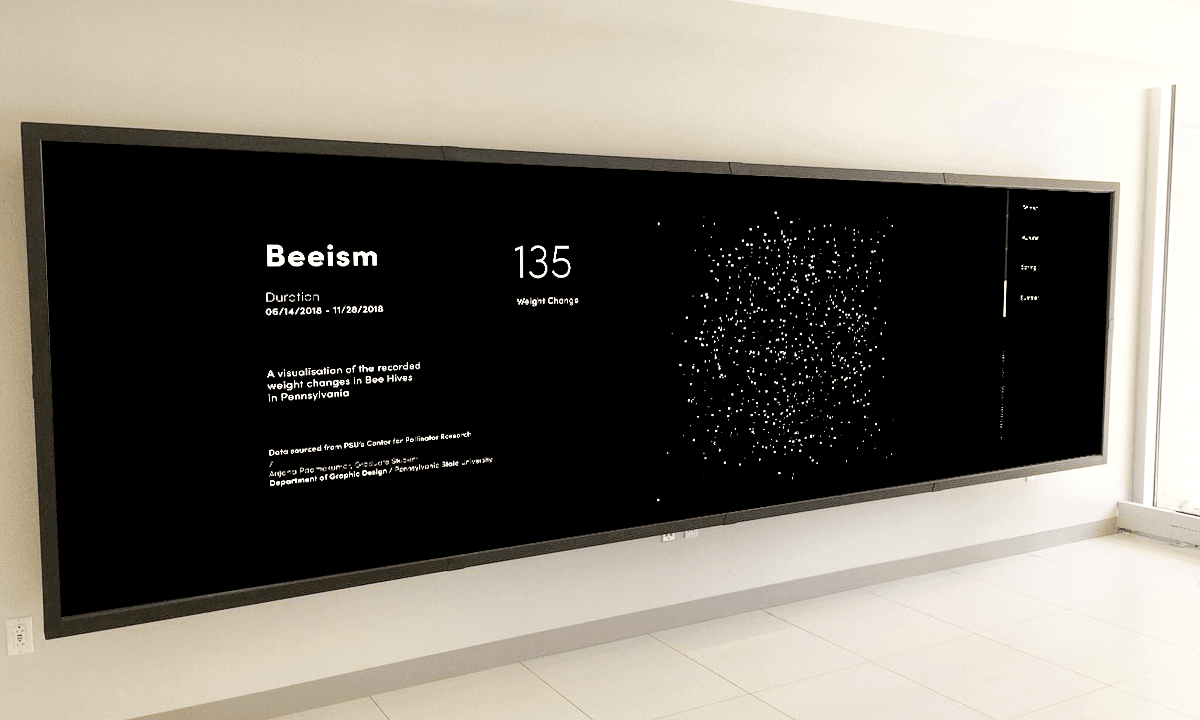
Beeism is a data visualization project investigating bee colony activity as a register of environmental change. A honey bee colony functions as a super organism, where thousands of individuals act through shared genetic patterning and social signals. Working with hive weight data collected by Penn State's Center for Pollinator Research between June and November 2018, the project rendered the colony's activity through a particle system, treating the hive as a living measure of the conditions around it.

Process
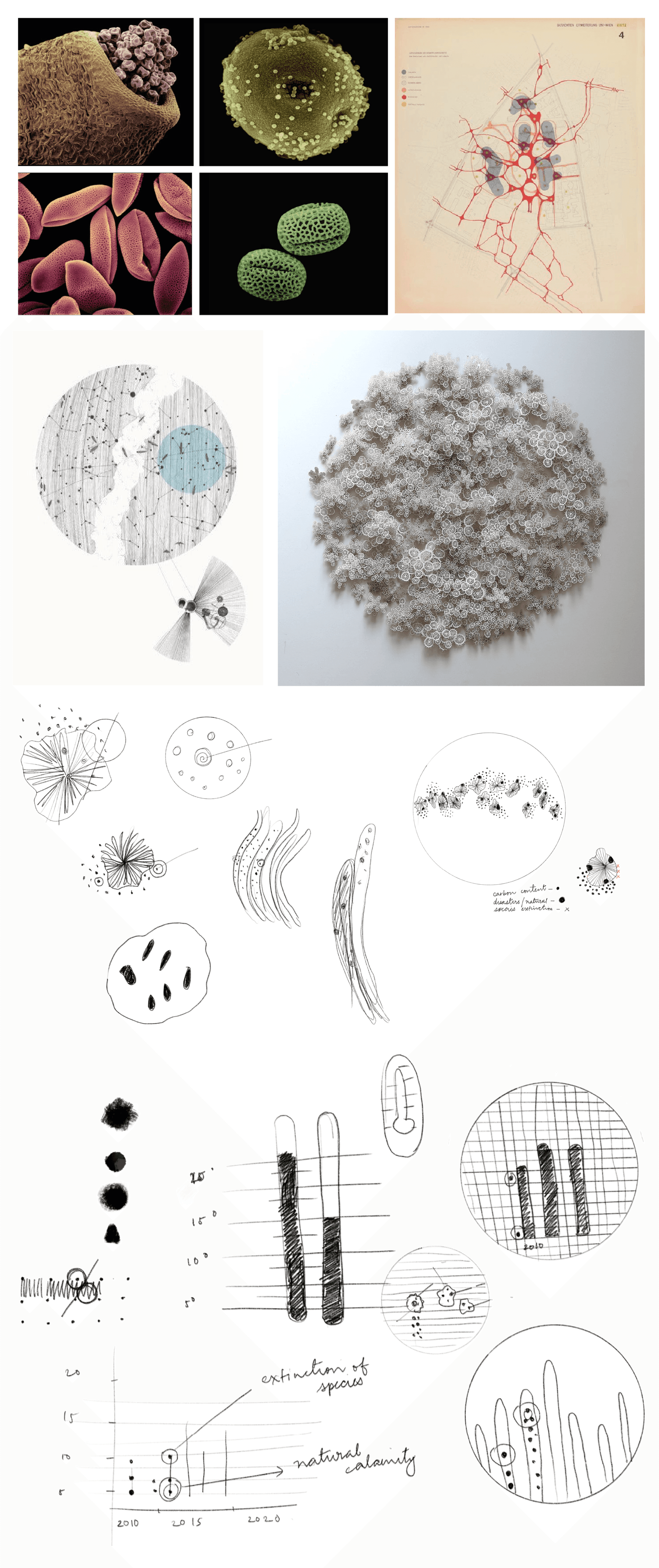
Hive weight data was sourced from the Center for Pollinator Research at Penn State and parsed to isolate trends across the season. Each particle in the visualization represents a unit of activity within the hive, written in p5.js to allow movement and accumulation that mirrors how a colony actually behaves. Visual decisions followed the data: density, motion, and pacing were calibrated so that the rhythm of the hive could be felt across time, not just measured at a single point.

Findings
Beeism argues that the bee colony, taken as a single organism, is one of the more legible registers of environmental change available to us, and that design can make its rhythms visible. Code and motion allow the colony's activity to be read as a continuous behavior rather than a static dataset. The project proposes that visualizing ecological systems requires methods that match the systems themselves: living, changing, and felt over time.
data humanism, ecological visualization
Set in Jetbrains
Created in Framer
© Anjana Padmakumar